California Preservation Awards Sponsorship
To learn about CPF's sponsorship opportunities, including how you can sponsor this page, click here or email us.
The 2026 Design Awards Event
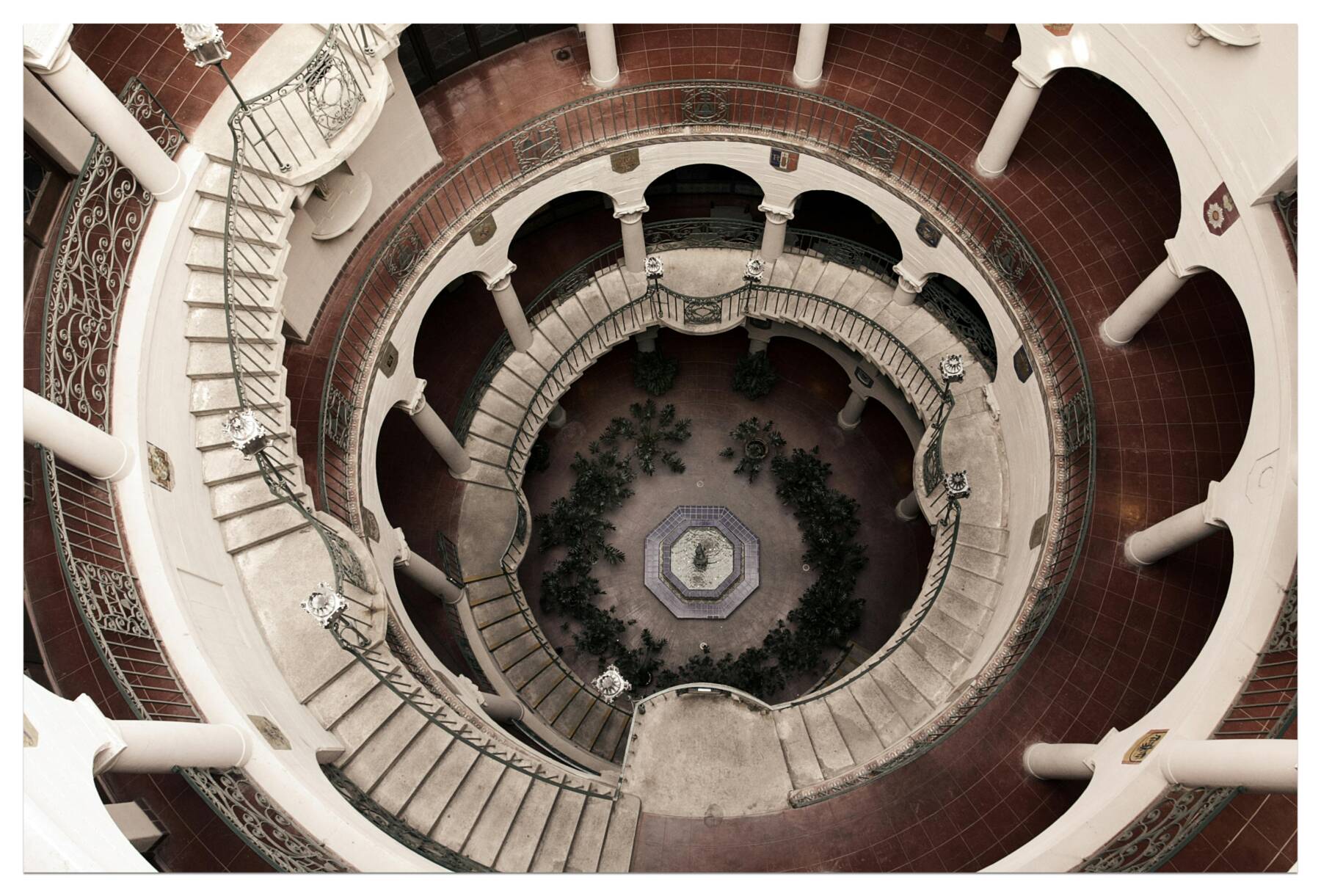 We're celebrating 24 award winning projects, as well as the Trustee's Awards for Excellence and four President's Awards at the Mission Inn in downtown Riverside. This special celebration is followed by a ticketed reception with food and drinks. Purchase your tickets before they sell out!
Los Angeles Wildfire Rapid-Response Heritage Documentation
Client
Adrian Scott Fine – Los Angeles Conservancy
Project Lead
Katie Horak – Architectural Resources Group, Inc.
Historic Preservation Consultants:
Morgan Quirk – Architectural Resources Group
Mary Ringhoff – Architectural Resources Group
Brannon Smithwick – Architectural Resources Group
Community Partner
Hans Allhoff – Altadena Heritage
Funding Partner
Javier Ors Ausín – World Monuments Fund
Advocacy Partner
Andrew Salimian – Los Angeles Conservancy
Photography
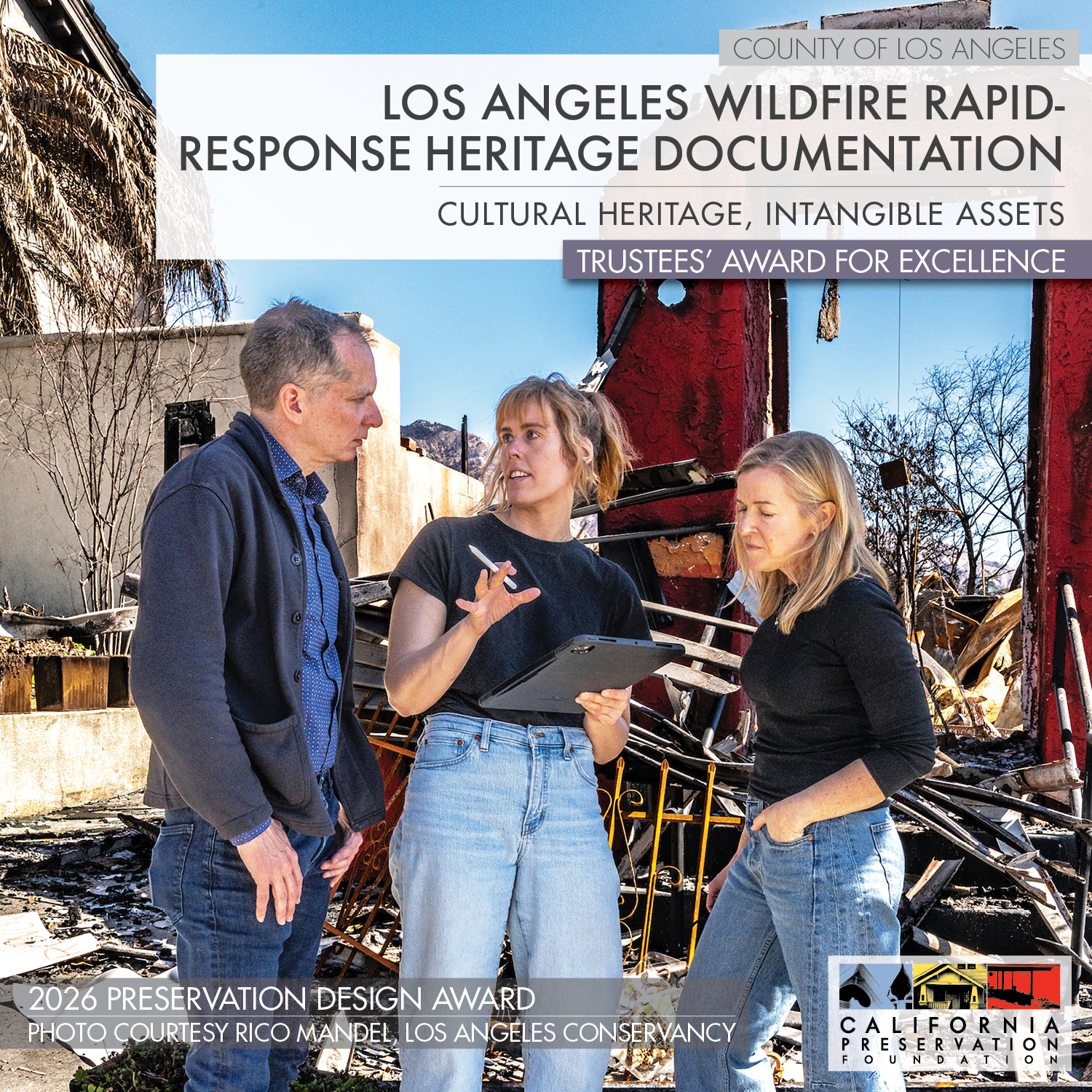
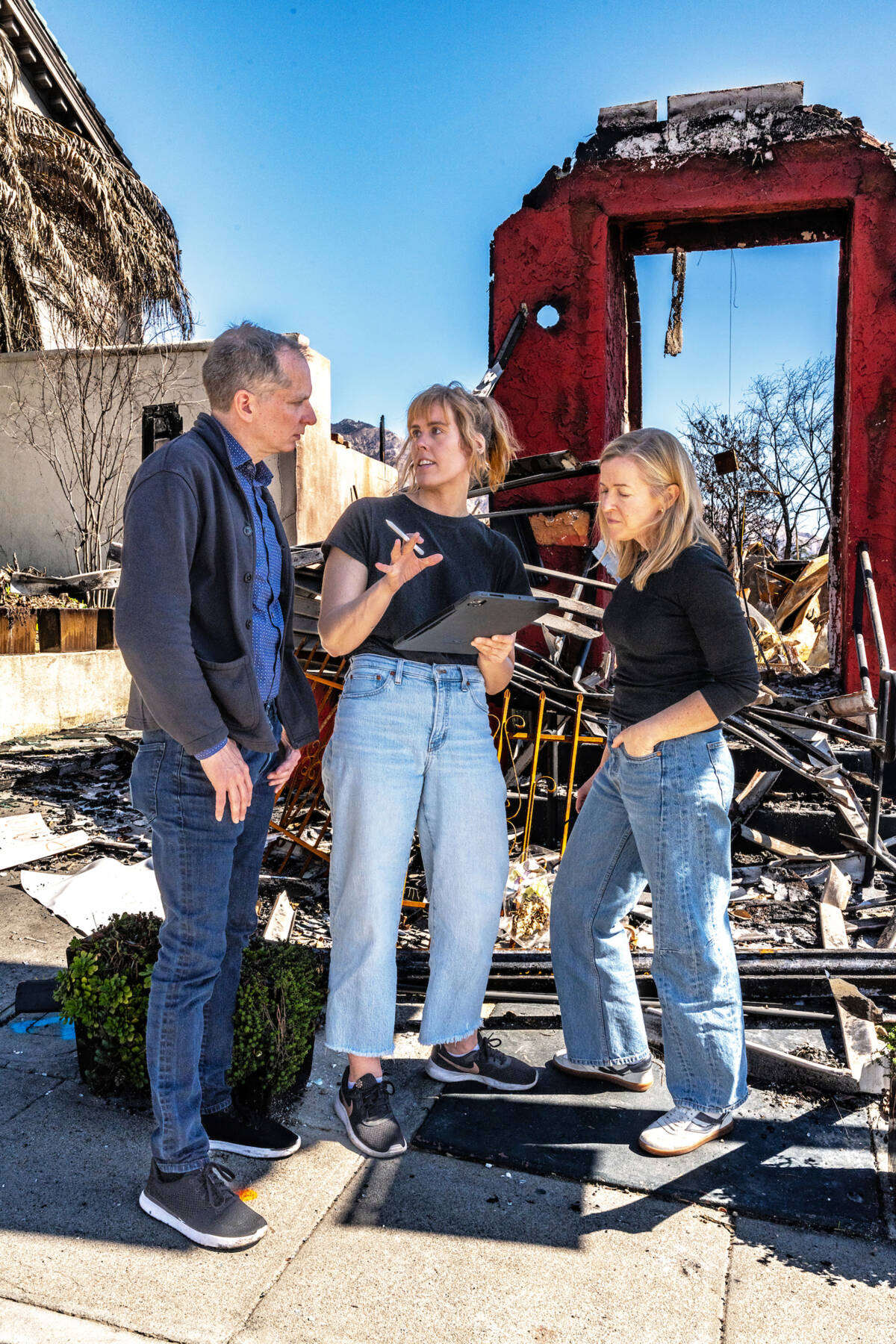
Courtesy Rico Mandel, Los Angeles Conservancy
Los Angeles Wildfire Rapid-Response Heritage Documentation
Los Angeles Wildfire Rapid-Response Heritage Documentation is a winner for the 2026 Preservation Design Award, receiving the prestigious Trustees’ Award for Excellence in the category of Cultural Resource Studies, Reports. Award recipients are selected by a jury of top professionals in the fields of architecture, engineering, planning, and history, as well as renowned architecture critics and journalists. Tickets and sponsorship options are available at californiapreservation.org/programs/awards/.
About Los Angeles Wildfire Rapid-Response Heritage Documentation
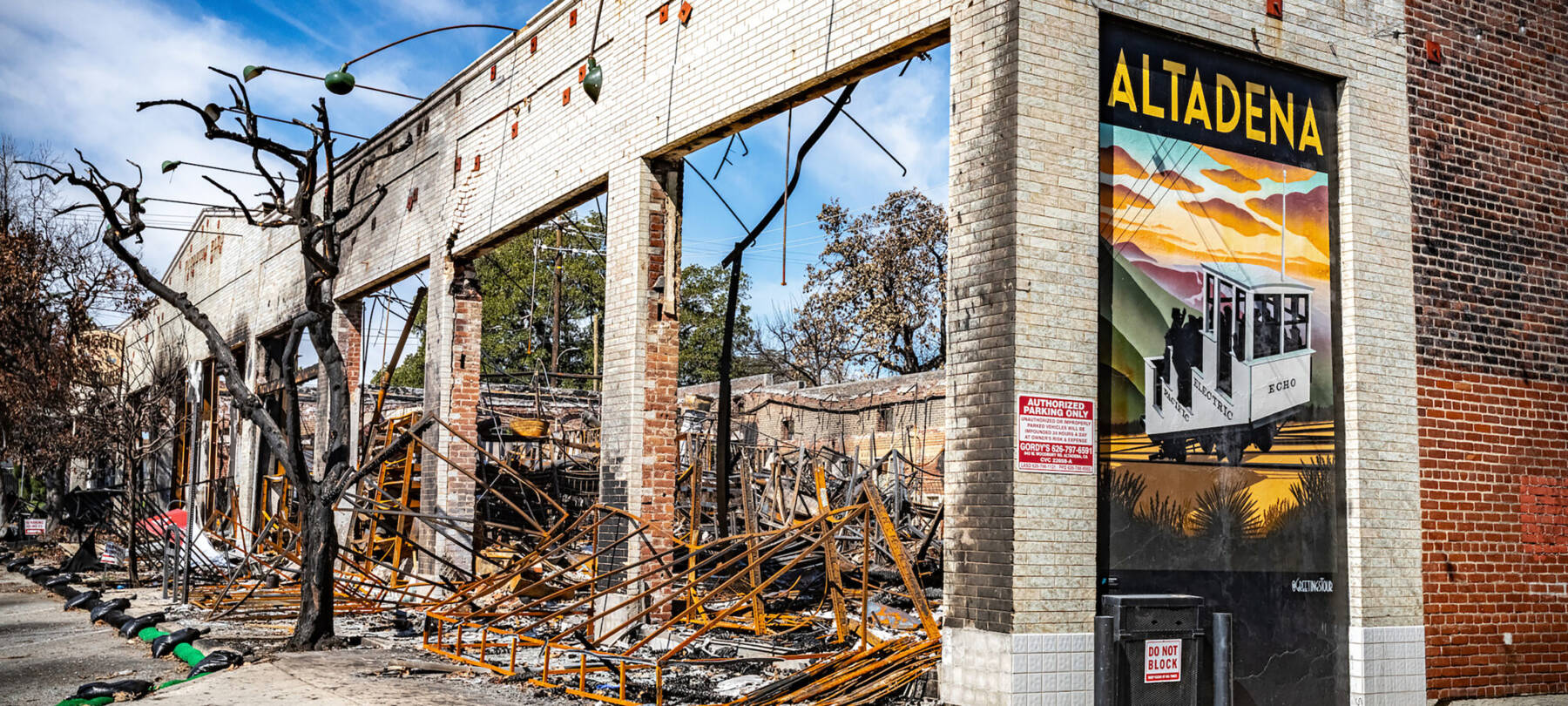
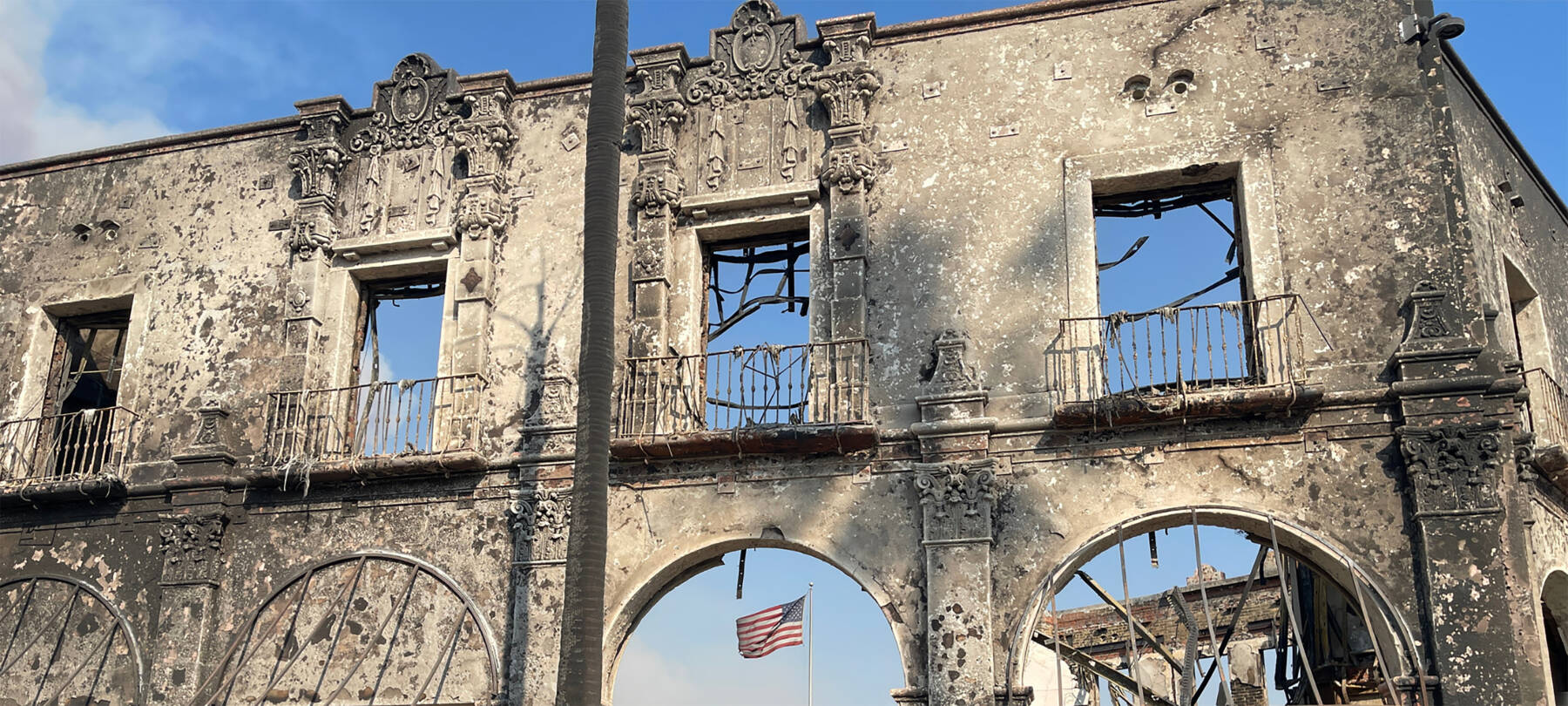
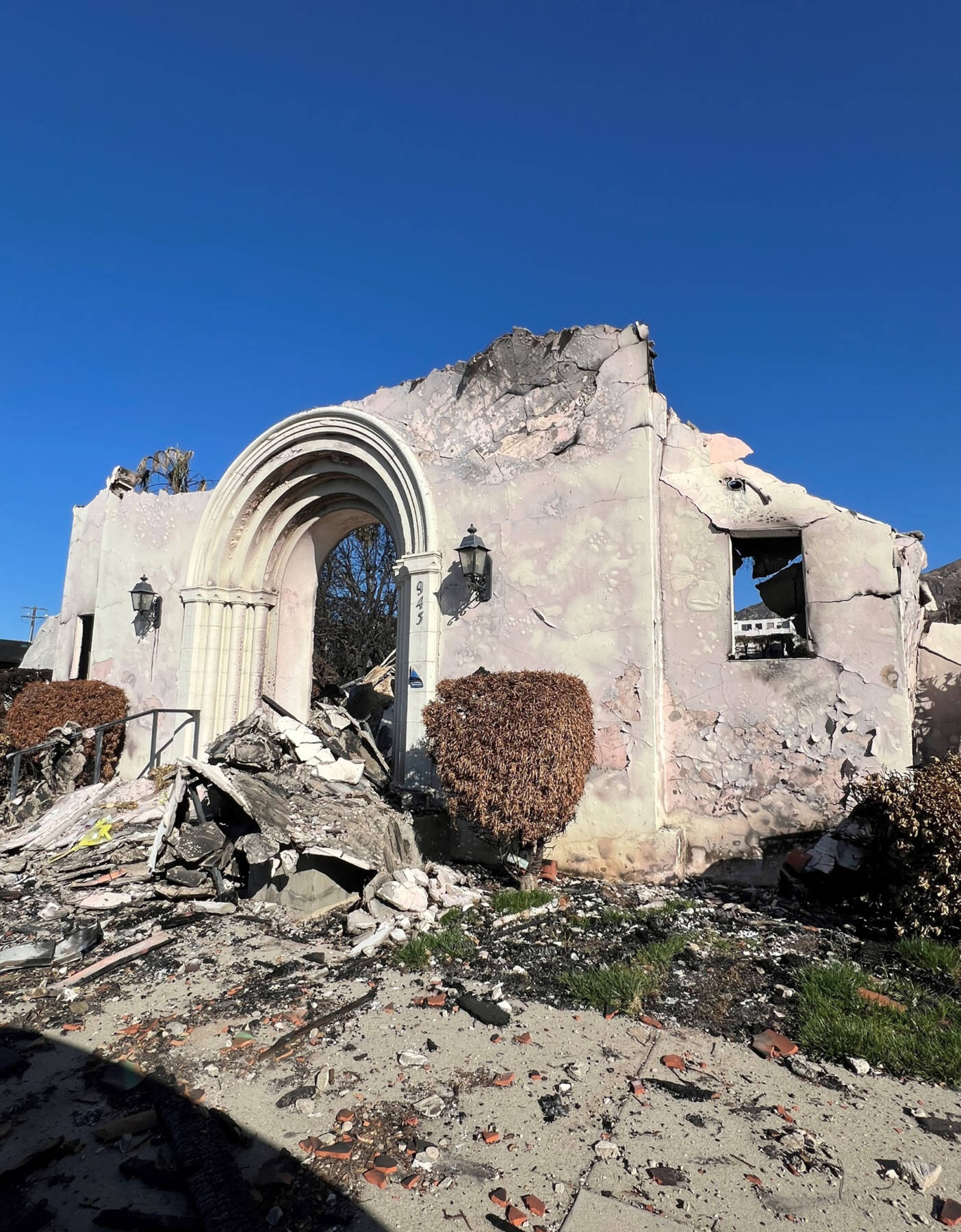
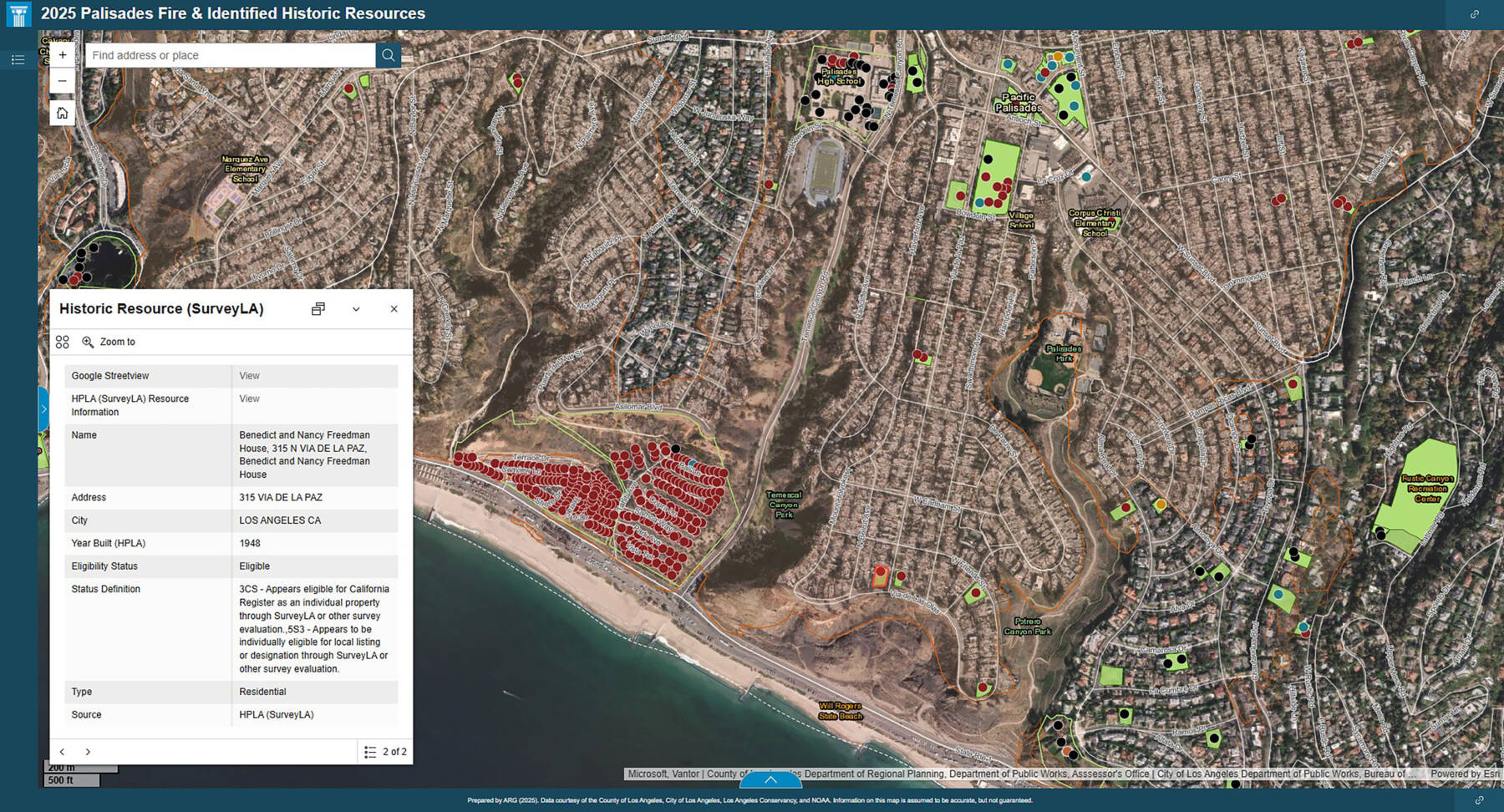
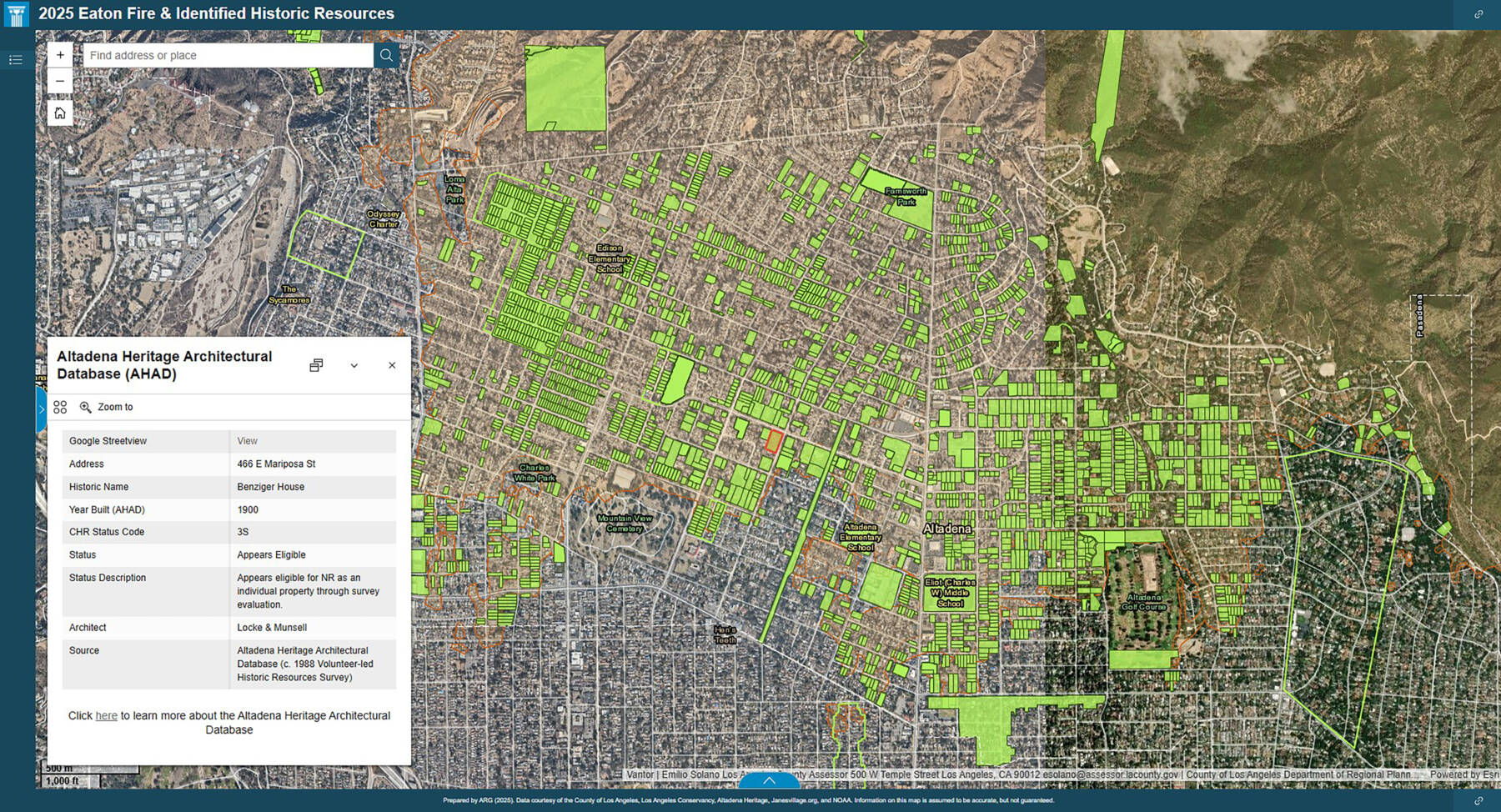
The project sought to assess and visualize wildfire impacts on historic and cultural resources in the Palisades and Eaton Fire areas. Using GIS, it was possible to integrate publicly available fire damage data, post-fire aerial imagery, and existing heritage inventories with locally maintained and community-sourced datasets. Two contrasting data environments shaped the approach: the Palisades Fire area benefited from a comprehensive citywide historic resources survey (SurveyLA), while the Eaton Fire area relied on volunteer-led documentation and local knowledge. By consolidating these datasets into publicly accessible interactive maps, the project enabled a remote assessment of heritage loss, revealed disparities in existing heritage documentation data, and supports both institutional and community recovery efforts and future documentation. The project demonstrates how GIS can critically serve as a first-response heritage documentation tool that is both replicable and socially responsive.
Community Importance
When the historic built fabric of a place is damaged or destroyed, the tangible record of shared memory and identity is likewise diminished. For preservation practitioners, responding to this loss means working to understand and safeguard the architectural and cultural expressions of the past at the very moment they are most vulnerable. Collecting and inventorying sites of significance impacted by disaster becomes a means of preserving collective histories and legacies, helping sustain continuity of place, memory, and meaning amid destruction.
In documenting wildfire impacts to historic resources, it became clear that the Palisades and Eaton fire areas presented distinct baseline conditions for heritage documentation. These differences were due in part to uneven levels of prior documentation. The rapid deployment of GIS-based documentation allowed the project team to visualize, categorize, and interpret loss with precision, offering a replicable model for areas where heritage data infrastructure is well developed. The initiative also relied on the community-driven identification of sites of significance, informed through collaboration with local agencies, preservation advocacy organizations, and community members who contributed historical knowledge, archival records, and locally maintained datasets. This collective effort proved to be a meaningful and engaged form of documentation, serving as a repository for collective memory during the earliest waves of shared grief and resilience.
By applying a consistent geospatial methodology across two very different data environments, the project demonstrated that rapid-response heritage documentation can be both standardized and context-sensitive. Building upon this foundation, the project supports community recovery by providing a trusted, shared record of cultural loss and survival, and by establishing the groundwork for future planning and documentation efforts that will guide long-term resilience and investment.
About CPF and the Awards
Held in conjunction with CPF’s 2026 Annual Conference in Riverside, the 2026 Mission Inn Preservation Design Awards Ceremony and Reception will spotlight excellence in historic preservation in a setting that reflects the very spirit of the work being honored. This special evening brings together award recipients, conference participants, preservation leaders, and supporters from across California to celebrate outstanding preservation projects and leadership through the Preservation Design Awards and President’s Awards.
Founded in 1978, the California Preservation Foundation (CPF) is California’s statewide nonprofit organization dedicated to the protection of historic places and cultural heritage. Through education, advocacy, and community-centered programs, CPF supports the people, projects, and policies that keep California’s historic resources vital and valued. We now support a national network of more than 36,000 members and supporters. Click here to learn how you can become a member.