A Major Victory for Historic Preservation in California
Governor Newsom Signs AB 1265, Extending California’s Historic Rehabilitation Tax Credit
New law extends California’s Historic Rehabilitation Tax Credit through 2031 and strengthens a critical tool for adaptive reuse, housing, downtown revitalization, and reinvestment in historic places.
The California Preservation Foundation celebrates Governor Gavin Newsom’s signing of AB 1265, authored by Assemblymember Matt Haney, extending California’s Historic Rehabilitation Tax Credit through 2031 and strengthening one of the state’s most important tools for bringing historic buildings back to productive use.
Co-sponsored by the California Preservation Foundation (CPF) and AIA California, AB 1265 provides greater certainty for property owners, developers, communities, and investors seeking to rehabilitate historic buildings while helping California leverage private investment to preserve the places that tell our state’s diverse history.
20%Tax Credit
For qualified rehabilitation expenditures on eligible certified historic structures.
$5MMaximum Credit
Maximum credit available per taxpayer under the renewed program.
2027–31Five More Years
The renewed state program applies during the 2027 through 2031 taxable years.
20%For Smaller Projects
A portion of available credits is reserved for projects below $2.5 million in qualified rehabilitation costs.
HousingBuilt Into Scoring
The allocation framework recognizes housing created, preserved, or rehabilitated through eligible projects.
Preservation as a Tool for California’s Future
AB 1265 does more than continue an existing preservation program. It more closely connects historic rehabilitation with some of California’s most pressing housing and economic-development needs.
Historic rehabilitation projects frequently face financing gaps because of the added costs involved in adapting older buildings for contemporary use. By helping close those gaps, rehabilitation tax credits can make otherwise infeasible projects possible—creating housing through adaptive reuse, revitalizing downtowns and neighborhood commercial districts, supporting construction activity, and returning vacant or underused buildings to productive use.
What Rehabilitation Tax Credits Can Make Possible
California already has powerful examples of historic buildings returned to use through the federal Historic Rehabilitation Tax Credit. These projects illustrate the kinds of housing, adaptive reuse, reinvestment, and preservation outcomes that financial incentives can help unlock.
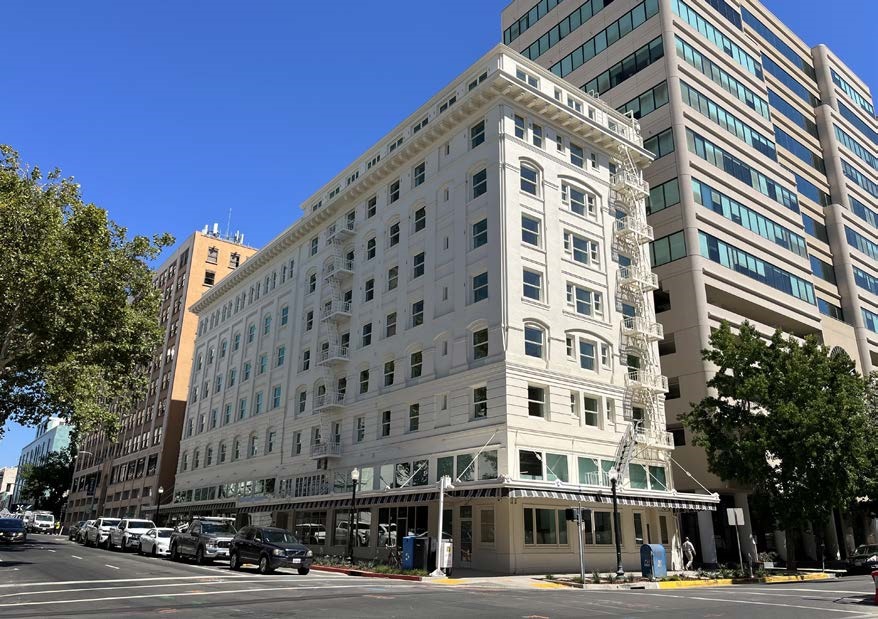
Capitol Park Hotel
A historic hotel and commercial building rehabilitated as 134 units of supportive housing, while retaining significant historic interior and exterior features.
Image: California Office of Historic Preservation

Gordon Building
After suffering significant damage in the 2014 Napa earthquake, this Spanish Colonial Revival landmark was stabilized, repaired, and returned to productive retail and office use through a certified rehabilitation.
Image: California Office of Historic Preservation
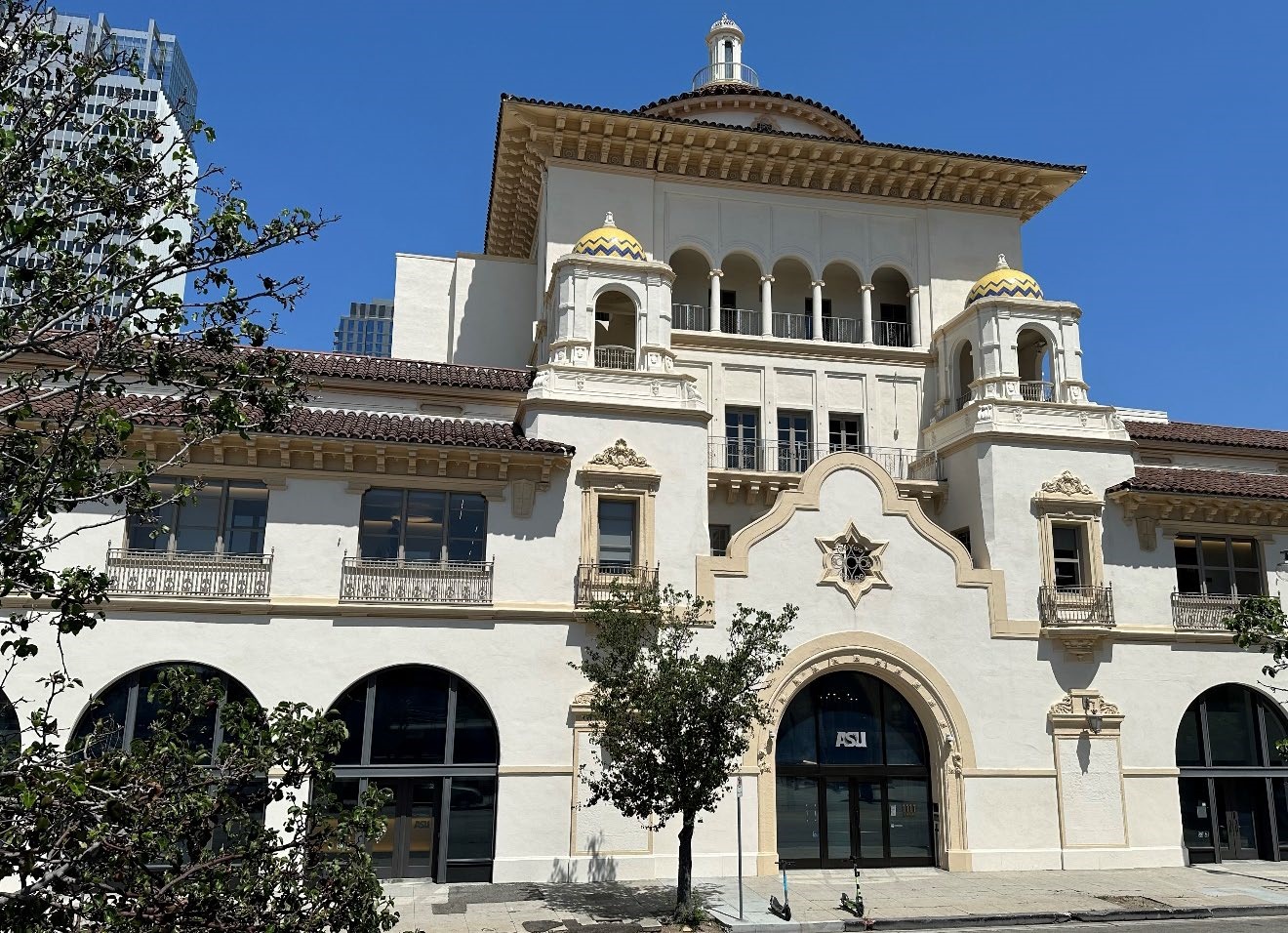
Los Angeles Herald Examiner
Julia Morgan’s landmark newspaper building was rehabilitated after decades of uncertainty, preserving its distinctive Mission Revival architecture while returning the building to active commercial use.
Image: California Office of Historic Preservation
Project examples above participated in the federal Historic Rehabilitation Tax Credit program and are shown as illustrations of historic rehabilitation tax incentives in practice. They are not presented as recipients of the newly extended California state credit.
Connecting Historic Rehabilitation and Housing
Under AB 1265, housing plays a direct role in the competitive allocation process. The legislation establishes a scoring framework that considers both qualified rehabilitation expenditures and housing units created, preserved, or rehabilitated as part of a project.
That connection is particularly important in historic downtowns and commercial districts, where older hotels, offices, commercial buildings, and other structures can sometimes be adapted for residential use while retaining the architectural and cultural resources that make communities distinctive.
A Stronger Tool for Adaptive Reuse
California’s historic buildings represent an enormous reservoir of housing, economic opportunity, embodied energy, craftsmanship, and community identity. AB 1265 strengthens the financial framework for putting those buildings back to work rather than allowing them to remain vacant, deteriorate, or disappear.
Years in the Making
The signing of AB 1265 is the latest chapter in a multi-year effort to establish and sustain a meaningful state incentive for historic rehabilitation in California.
California Establishes Its First State Historic Rehabilitation Tax Credit
Then-Senate President pro Tempore Toni Atkins authors SB 451, creating California’s state Historic Rehabilitation Tax Credit and establishing a new financial incentive for private investment in qualified historic properties.
Preservation and Development Partners Push for a Durable Program
Preservationists, architects, property owners, developers, local communities, and partner organizations continue working to strengthen and extend the state incentive while demonstrating the role historic rehabilitation can play in housing and economic development.
AB 1265 Advances Through the Legislature
Assemblymember Matt Haney carries AB 1265, co-sponsored by the California Preservation Foundation and AIA California.
Governor Newsom Signs AB 1265
With the Governor’s signature, the state Historic Rehabilitation Tax Credit is extended through 2031 with a revised allocation framework for future projects.
Implementation and Annual Funding
Attention now turns to implementation and to securing annual credit allocations through the state budget process or other legislation.
A Victory Built Through Partnership
The achievement reflects years of persistence and collaboration among preservationists, architects, property owners, developers, local communities, and policymakers who recognized that historic buildings can be active contributors to California’s future.
CPF is especially grateful to Assemblymember Matt Haney for carrying AB 1265; to Senator Toni Atkins for establishing the original state credit through SB 451; to Governor Gavin Newsom for signing both measures into law; and to our co-sponsor, AIA California.
We also thank the many organizations, professionals, property owners, community advocates, and individuals whose sustained engagement helped carry the effort forward.
AB 1265 Is Law. What Happens Next?
Extending the program establishes the framework—but the amount of historic rehabilitation tax credits available each year will depend on funding authorized through California’s annual Budget Act or other legislation.
CPF’s work therefore continues: helping ensure the program is implemented effectively and supporting a robust annual allocation so that AB 1265 can translate into real rehabilitation projects in communities throughout California beginning in 2027.
Thank You
To everyone who wrote a letter, contacted a legislator, shared information about the bill, participated in advocacy efforts, or helped make the case for investing in California’s historic places: thank you.
AB 1265 demonstrates what sustained partnership can accomplish. California now has a stronger tool for preserving our shared inheritance while adapting historic places to serve the generations that follow.
About the Author
 The California Preservation Foundation is a network of more than 35,000 members and supporters who are committed to protecting our shared architectural and cultural heritage. We are a leader in preservation education and advocacy, responding to hundreds of requests for assistance and training more than 3,000 people each year.